|
| BMI Calculation |
|
| Stress Index |
|
| Are you too Acid? |
|
|
|
 |
|
 |
|
 |
|
|
|
|
|
| Are You Too Acidic? |
|
A surprising number and variety of physical problems and diseases can be caused by acidity. Today, the vast majority of the populace in industrialized nations suffers from problems caused by acidification, because both modern lifestyle and diet promote acidification of the body's internal environment.
In general, the current standard diet is primarily composed of acidic or acidifying elements (proteins, cereals, sugars). Alkaline foods such as vegetables are eaten in much smaller quantities; their alkaline content is insufficient to neutralize surplus acids. Stimulants like tobacco, coffee, tea and alcohol are also extremely acidifying. Stress and physical activity (both insufficient or excessive amounts) also cause acidification. |
 |
Do you exhibit signs of acidification?
Find out with this checklist of 30 symptoms. |
| 1. |
Lack of energy, constant fatigue, loss of physical tone and psychic drive, sensation of heaviness in the limbs, feelings of inability to cope. |
| 2. |
Lower body temperature; frequently feels cold. |
| 3. |
Tendency to get infections. |
| 4. |
Loss of drive, joy and enthusiasm. |
| 5. |
Depressive tendencies. |
| 6. |
Nervousness, agitation without cause, hyperactivity, sensitivity to high-pitched noises and easily stressed. |
| 7. |
Very pale face. |
| 8. |
Headaches. |
| 9. |
Eyes tear easily. |
| 10. |
Conjunctivitis. |
| 11. |
Inflammation of the corneas and eyelids. |
| 12. |
Acidic saliva. |
| 13. |
Loose teeth. |
| 14. |
Inflamed, sensitive gums. |
| 15. |
Mouth ulcers. |
| 16. |
Cracks at the corners of the lips. |
| 17. |
Recurring infections of throat and tonsils. |
| 18. |
Teeth are sensitive to hot, cold or acidic foods. |
| 19. |
Teeth have a tendency to crack or chip. |
| 20. |
Pain in the nerves of the teeth. |
| 21. |
Excess stomach acid. |
| 22. |
Acid regurgitation. |
| 23. |
Gastritis. |
| 24. |
Ulcers. |
| 25. |
Nails are thin and split and break easily. |
| 26. |
Hair looks dull, has split ends, and falls out. |
| 27. |
Dry skin. |
| 28. |
Skin tends to be irritated in regions where there are heavy concentrations of sweat. |
| 29. |
Hives. |
| 30. |
Leg cramps and spasms. |
You're probably are aware that the body only functions well in a very narrow range of body temperature. A body temperature of 98.6 degrees is normal. If it goes lower, you don't feel so good, if it goes even a couple of tenths of a degree higher, you don't feel well. Three or four degrees higher might bring about convulsions and death.
Well, the body also has another small range in which it can operate and that is it's pH. The optimum pH for the body fluids is 7.0. |
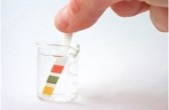 |
What is pH? Its a rating system. pH an acronym for "potential of hydrogen" is a value that indicates the acidity or alkalinity of a liquid. The measurement of the hydrogen ion concentrate in a liquid determines the pH value. Every liquid has a pH value which falls on a scale between 0 and 14, with 7 being neutral. A pH value less then 7 is acidic; values greater than 7 indicates alkalinity. Examples: Battery acid and vinegar - two very acidic liquids - have pH values on the lower end of the scale, while baking soda and ammonia, both of which are very alkaline, are on the higher end of the pH scale. Pure water, meanwhile, has a pH value of 7 - it's neither acidic or alkaline.
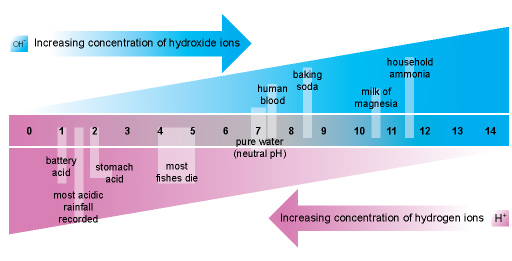 Keeping your Body's pH in Balance
 Your body also has a pH value. In fact, all your body fluids each have a pH value. The adult body is about 60% fluid. This fluid fills every cell, the spaces between cells, and so forth. This fluid can be neutral, acidic or basic. As far as can be determined the body functions best when these fluids are neutral which is to say neither acidic or basic. (7.0)
The blood that is a small proportion of the total body fluid is an exception being significantly more basic (7.3-7.4 pH), Don't get confused by stomach acidity, or colon acidity as this is a totally different system then the internal system of the body.
Setting aside the blood and the digestive system, the internal fluids of the body (60% of the total body weight) should be neutral. When these fluids are acidic, they are irritants. If 60% of the body is irritating the other 40% there is a chronic non-optimum situation.
How does the body get acid?
The body has natural mechanisms to eliminate acids. It can handle the natural acids created by the body which are created in energy production and the process of rebuilding cells. However, the extra acidity created by a poor diet has the body systems overwhelmed with a backlog of acids. This pH (acidity/alkaline) is important to the health of living organisms.
What are the results of too much acidity?
The Japanese feel that the degenerative diseases as osteoporosis, cancers, arthritis, etc. are primarily due to acidosis (the system being too acid). Based on testimonials, conditions, ranging from dandruff and fungus under the toe to diabetes and cancer have lessened or in some cases gone into full remission simply by achieving a proper acid/base balance.
When a body is acidic, it creates a welcoming environment for viruses and bacteria to come in and begin to flourish. As viruses and bacteria continue to flourish inside our body, we experience lack of energy, frequent illness and pains. If a person doesn't do anything about changing the acidic state of the body, the situation can get worse. Virus or bacteria can mutate into a serious illness.
Conversely, bacteria and viruses perish in alkaline environment, because a pH balanced, or alkaline body doesn't create the environment for viruses and bacteria to thrive and flourish. Thus, no bacteria or virus will enter an alkaline body, grow and mutate into serious illness or disease. The bottom line is that we need to handle the reasons the body becomes acidic and there are some things that can be done. Its not only the poor nutrition but the constant bombardment of the body by pollutants and poisons, chemicals that we either ingest, breath or put into our body daily.
|
|
|
|
|

















.jpg)
.jpg)